
The global bathroom vanities market is projected to nearly double over the next decade, surging from $43.15 billion in 2025 to reach $85.62 billion by 2035, according to new industry data released this January.
This robust 7.81% compound annual growth reflects fundamental shifts in how homeowners approach bathroom design—moving from purely functional spaces to personalized wellness sanctuaries.
HOMEOWNER INVESTMENT REACHES NEW HIGH
Recent data from Houzz indicates that the median spend for a minor remodel of a small bathroom under 100 square feet has reached $6,000. Larger bathrooms over 100 square feet now command a median minor remodel spend of $11,500.
Professional labor costs for replacing a vanity now range from $665 to $3,300 per project (This Old House, 2025), while custom-built vanity construction costs peak at $2,800 per linear unit, plus installation fees of $200 to $1,000.
These figures signal a market where homeowners prioritize quality and customization over cost savings.
KEY FINDINGS FROM NKBA 2026 BATH TRENDS REPORT
The National Kitchen & Bath Association (NKBA) released its highly anticipated 2026 Bath Trends Report in January, drawing insights from nearly 700 industry experts including designers, manufacturers, remodelers, and architects.
Technology emerged as the dominant force shaping bathroom design across three key areas:
- Technology in Design Inspiration: Younger homeowners increasingly turn to AI for design inspiration that integrates smart features, sustainability, and style
- Technology in Fixtures: Smart home integration expands through intelligent showers, lighting, and energy systems
- Technology for Wellness: Health-oriented features, stress-reduction tools, and aging-in-place innovations become mainstream
WOOD FACED VANITIES OVERTAKE WHITE CABINETRY
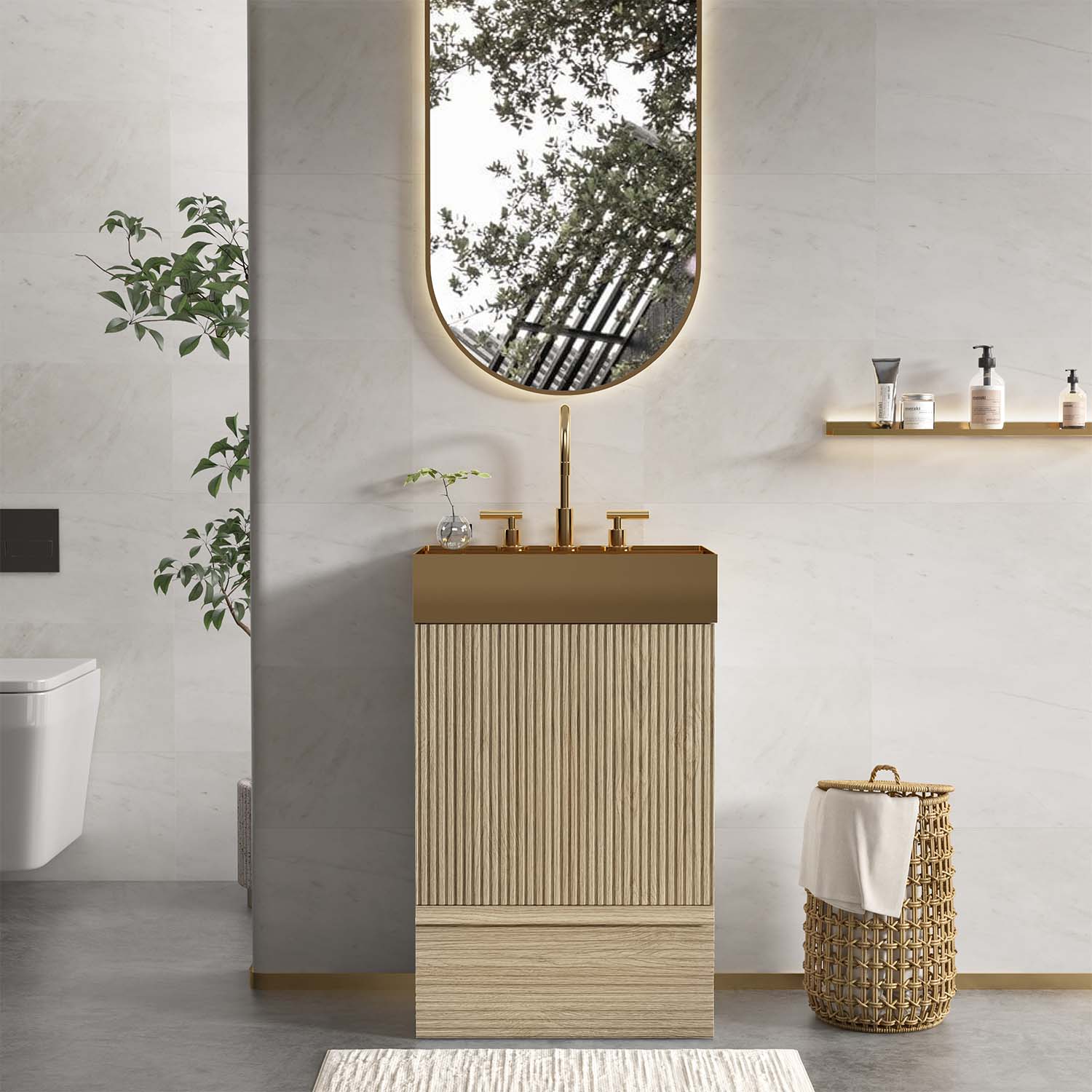
In a significant aesthetic shift, wood has overtaken white as the preferred vanity finish. According to Houzz data, wood is now the #1 ranked vanity color choice, selected by 26% of homeowners, while white has fallen to #2 at 22%.
The NKBA report confirms this trend, finding that wood-faced vanities (62%) have surpassed painted finishes (53%) in popularity as biophilic design continues to be prioritized in the bath.
Light neutrals dominate overall color preferences, with 96% of respondents identifying neutrals as the most popular bath colors—specifically off-white (58%), light brown/tan (54%), and white (40%).
DOUBLE VANITIES AND SMART STORAGE BECOME STANDARD
Modern lifestyles are dictating new functional requirements. According to NKBA data:
- 6 in 10 homeowners now desire double-vanity configurations
- 8 in 10 renovators explicitly seek vanities with customizable storage modules
- 8 in 10 homeowners demand integrated power outlets within the vanity cabinet
- 9 in 10 designers cite lighting quality as a critical vanity area consideration
Item-specific storage has become a priority, including built-in compartments for hair tools, makeup, and medications, plus custom dividers and charging stations within vanity cabinetry.
THE BATHROOM’S FOOTPRINT EXPANDS
Seventy-two percent of industry experts agree that the overall bath footprint will increase to make room for wellness-centered spaces, universal design considerations, and efficient storage solutions.
Space allocation in the primary bath is a top priority for 89% of respondents. More than half say a larger shower size is more important than having a bathtub, enabling spa-like features including steam options, saunas, aromatherapy, chromotherapy, and integrated seating.
FINISH TRENDS: MATTE OVER POLISHED
For faucets and hardware, organic finishes now dominate. Matte (54%), brushed (51%), and satin (46%) finishes are all more popular than polished (39%), pointing to a preference for subtle, natural design cues.
Lighting has become a layered consideration:
- 92% agree task lighting should always be included
- 51% predict mood lighting in showers will gain prominence
- 80% include nighttime-specific lighting
- 88% list natural lighting as a top priority
ACCESSIBILITY MEETS ELEGANCE
Aging-in-place design elements have become so mainstream that aesthetics now match function. Grab bars, curbless showers, shower benches, and barrier-free entries are subtle safety features that also make primary baths look more luxurious and elevated.
Of those surveyed, 32% agree aging-in-place is now a mainstream trend, while 48% believe it’s on its way to becoming one.
HOSPITALITY INSPIRATION DRIVES DESIGN
Seventy-seven percent of respondents expect bath design tied to hotel or resort experiences to become increasingly popular. This reflects a fundamental shift in how homeowners perceive the primary bathroom—moving from utilitarian space to sanctuary dedicated to physical and mental well-being.
The report notes this isn’t about any single feature but rather a holistic approach: “It’s a fundamental shift in how we perceive and use the primary bathroom, moving from a purely utilitarian space to a sanctuary dedicated to physical and mental well-being, while also being smart and environmentally conscious”.
WHAT THIS MEANS FOR BATHROOM VANITY MANUFACTURERS
These industry findings point to clear imperatives for 2026 and beyond:
- Wood finishes and natural materials should lead product development
- Integrated power and smart technology are no longer optional
- Customizable storage solutions meet consumer demand for personalization
- Universal design features must balance function with aesthetics
- Lighting integration deserves equal consideration with cabinetry
Citta Neo remains committed to these principles, designing bathroom vanities that respond to evolving consumer needs while maintaining the highest standards of craftsmanship and design.
SOURCE REFERENCES:
- Astute Analytica Market Report, January 202
- NKBA 2026 Bath Trends Report
- Houzz Renovation Data, 2024-2025
- HomeAdvisor Cost Data, 2025
TAGS: Furniture industry news, market trends, bathroom vanity, NKBA, KBIS, wellness design, wood vanities, smart home

Leave a Reply